
Short on time? Do sections 1, 2 and 3 first. Most rain leaks start at the same few places: gutters, roof flashing, and old caulk around windows and doors.
- Stay off the roof. Most of the roof list can be seen from the ground. Use binoculars or the zoom on your phone camera.
- Not steady on a ladder? Skip it. Look at the gutters from the ground and hire the cleaning out.
- Look into the attic and the crawl space from the opening. You do not need to go in.
- Bring a flashlight, a garden hose for the gutters, and your phone for photos.
- Water coming in now? If it is near a light fixture, an outlet or the electrical panel, turn off that circuit at the breaker first, and stay out of standing water. Then call an emergency water mitigation provider for the water and the drying.
- Shingles or tilesThe roof covering.
- FlashingMetal strips that seal the roof around the chimney, skylights, vents and walls.
- Vent pipe collarThe rubber ring around a pipe that comes up through the roof.
- Gutter and fasciaThe trough at the roof edge, and the board it hangs on.
- Downspout and splash blockThe pipe that carries gutter water down, and the pad that steers it away.
- CaulkThe sealant line around window and door frames.
- AtticThe space under the roof.
- Crawl space ventA screened opening low on the outside wall.
- Storm drainThe inlet at the curb in the street.
1. Roof, from the ground
Stand in the yard or across the street, and look at each side of the roof. Use binoculars or your phone camera zoom.
What a problem looks like
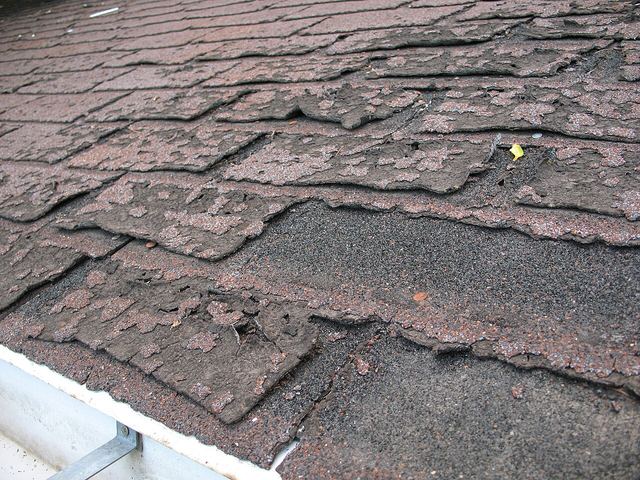
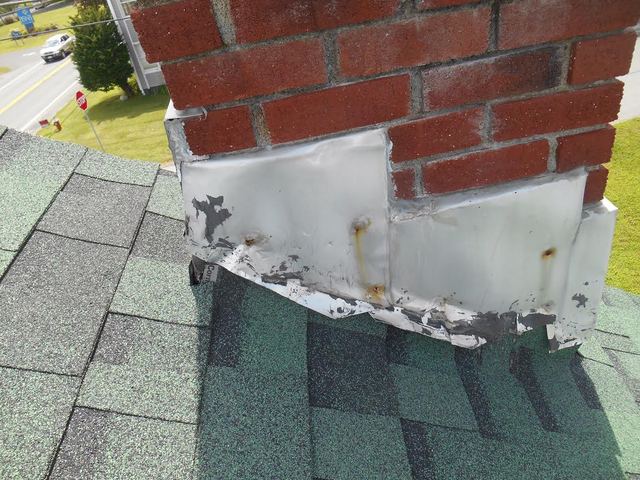
Call a pro if anything is missing, loose or lifted. If you could not see a whole side of the roof, a roofer can look.
2. Gutters and downspouts
Have the gutters cleaned first. Then run a hose into each one, or watch them in the next rain. You can judge all of this from the ground.
What a problem looks like

Call a pro if a gutter has pulled away, or water ends up against the wall or the foundation.
3. Outside walls, windows and doors
Walk all the way around the house.
What a problem looks like

Call a pro if wood is soft or rotted, or a crack or gap is too big for caulk.
Want this on paper? Get the free two-page printable.
4. Attic
Look from the hatch: stand on a steady ladder with your head and a flashlight through the opening. Do not walk in the attic unless you know where it is safe to step.
Call a pro if you find wet wood, wet insulation or daylight coming through.
5. Ceilings and upper walls
Go room by room with the lights on.
What a problem looks like
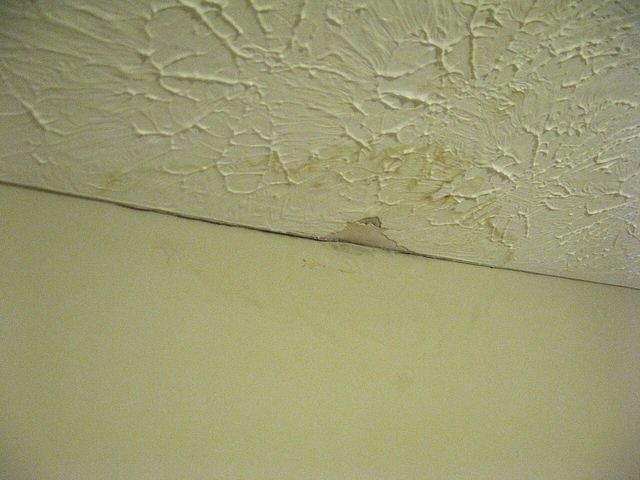
Call a pro if a stain is new or growing, or the drywall is soft. A stain under a bathroom is often plumbing, and so is one that grows on dry days.
What you circled (section, which room or side of the house, date)
6. Windows, doors and floors, from inside
Check every outside wall, window and door. Anything stained should feel firm.
Call a pro if a sill, baseboard or floor is soft, or a room smells musty.
7. Garage, crawl space and foundation
Shine a flashlight into the crawl space from its opening. Do not crawl in.
Call a pro if there is standing water under the house or a stained foundation crack.
8. Street, sandbags and alerts
Four things to get done before a storm. Tick each one when it is done.
What a problem looks like
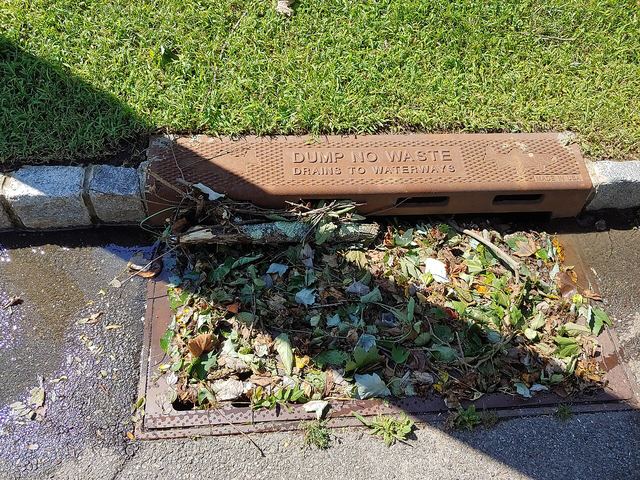
9. After the first real rain
Go back and look again. A fresh stain shows where the leak is.
Call a pro if anything new shows up. Keep the photos for your insurer and whoever does the repair.
If you could not tick a box
A box you cannot tick is not always a repair. It is a place to look more closely. Take a photo, write down where it is, and check it again after the first rain. For the reasons behind each item, see how to prepare your San Jose home for El Niño. If a ceiling is already stained or dripping, see roof leak after the first rain: what to check.
This checklist is a look with your own eyes. It does not replace a roofer on the roof, and it will not find moisture that has not shown on the surface yet. Our free El Niño storm check covers 50 points inside the house with a moisture meter and a thermal camera, then gives you a preliminary estimate for the roof, gutters, siding and caulking. Roofing is done by our licensed C-39 subcontractor.
Send us your list
Want us to look at what you found?
Send your checklist to us from here. We see which boxes you ticked and which you left blank, section by section, and we call you to talk it through. If it needs a closer look, we book the free El Niño storm check.
You have ticked 0 of 52 boxes.
See exactly what gets sent
Tick some boxes above and your list shows here.
CSLB #1050108 · San Jose and the South Bay · Example photos are credited on the web page.
Sources
The items come from what we check on our own storm visits, plus published guidance from the Insurance Institute for Business & Home Safety, FEMA, the City of San José and Valley Water.
- 1. Valley Water: sandbag sites
- 2. City of San José: storm preparedness (AlertSCC signup: oem.santaclaracounty.gov)
- 3. Valley Water: Get Flood Ready
- 4. Insurance Institute for Business & Home Safety: Thunderstorm Ready Home
- 5. FEMA: Protect Your Home from Flooding, low-cost projects you can do yourself (copy hosted by Los Angeles County Public Works)
Photo credits. Curled, worn shingles with ragged edges. DMahalko, Dale Mahalko, Gilman, WI, USA, CC BY-SA 3.0. Bent, corroded flashing at the base of a chimney. Sandul1234, CC BY-SA 4.0. A plant growing in a gutter: it has been holding debris and water for a while. Jack Blueberry (Unsplash), Unsplash License. A crack running down a stucco wall. Javad Esmaeili (Unsplash), Unsplash License. A tan water stain and a cracked seam on a ceiling. Ed! (Photography Gallery), CC BY-SA 3.0. A curb storm drain covered with leaves and sticks. Destroyeraa, CC BY-SA 4.0. Photos are examples and are not of our jobs.