Older Bay Area houses were framed back when the bathroom was an afterthought, and it shows: small, dark, and boxed in. You can make one of these rooms feel dramatically bigger without moving a single wall. The trick is choosing fixtures and finishes that open up the floor and the sightlines, then dealing with whatever the plaster has been hiding while the walls are open.
- A floating vanity, a curbless walk-in shower, frameless glass, and large-format tile make a small bath read much bigger without moving walls.
- Layer the lighting and build storage into the walls (recessed niches and cabinets) so nothing crowds the floor.
- While the walls are open, fix what's behind them: galvanized pipe, ungrounded wiring, and missing ventilation.
- Waterproofing under the tile is the most important detail in a small shower.
Pick a layout that buys back floor space
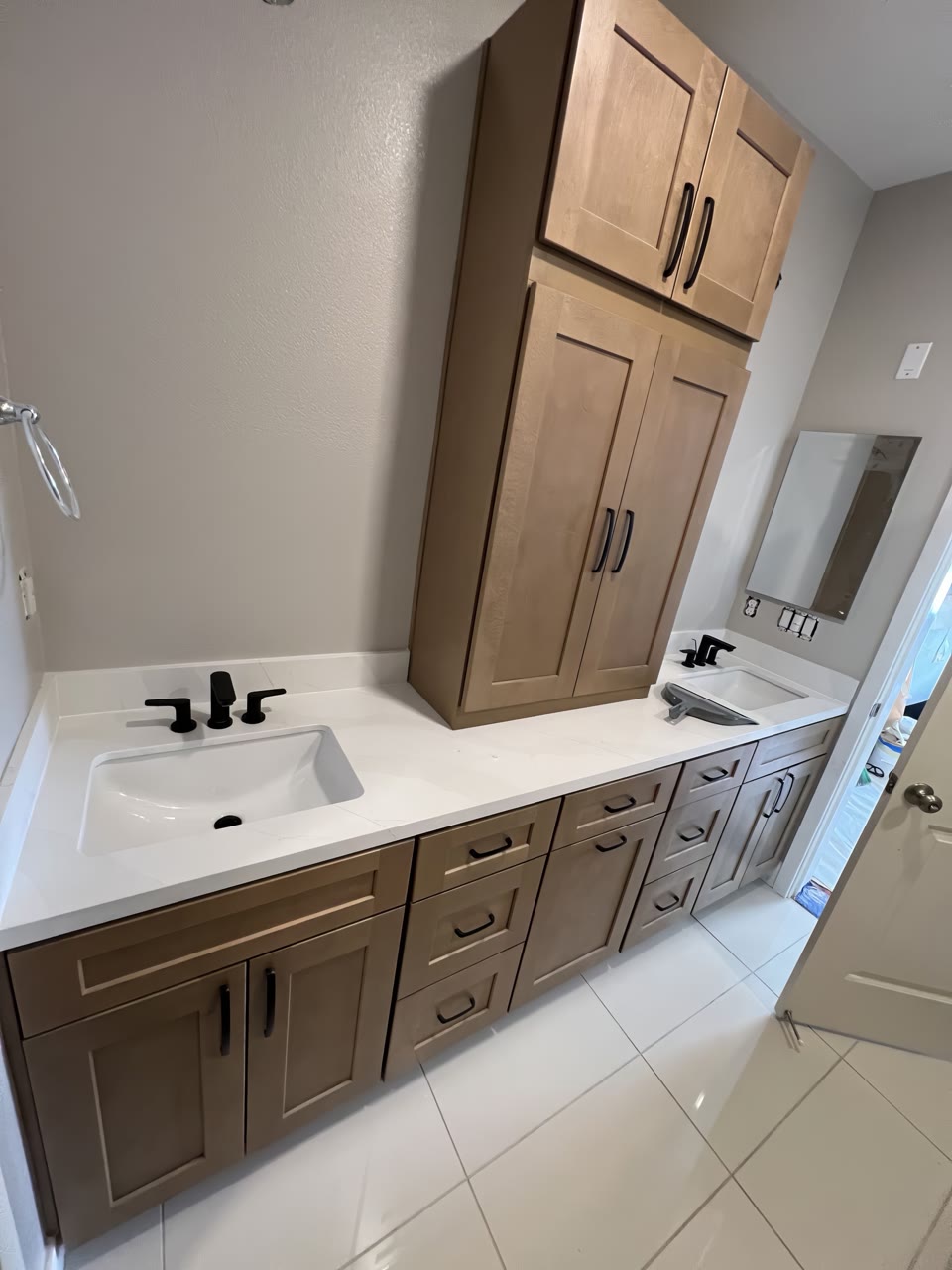
- Floating vanity: A wall-mounted vanity keeps the floor visible underneath, so the room reads as bigger. It also kills the dust-catching toe-kick and the grimy joint at the base.
- Curbless or walk-in shower: Swapping a tub you never use for a walk-in shower opens up the whole layout. A curbless entry removes the stepped curb and metal track where mold collects, and makes the floor look continuous.
- Wall-hung or compact toilet: A wall-hung toilet, or even a tighter-profile standard model, frees up a few critical inches in a narrow room.
If you want to keep a tub for resale or kids, a compact alcove tub with a glass screen instead of a curtain keeps the space feeling open.
Use tile and glass to stretch the room
Large-format tile is one of the simplest ways to make a small bathroom feel bigger. Fewer grout lines mean fewer visual breaks, so the walls and floor look like continuous planes. Running the same tile from the floor up into the shower reinforces that effect.
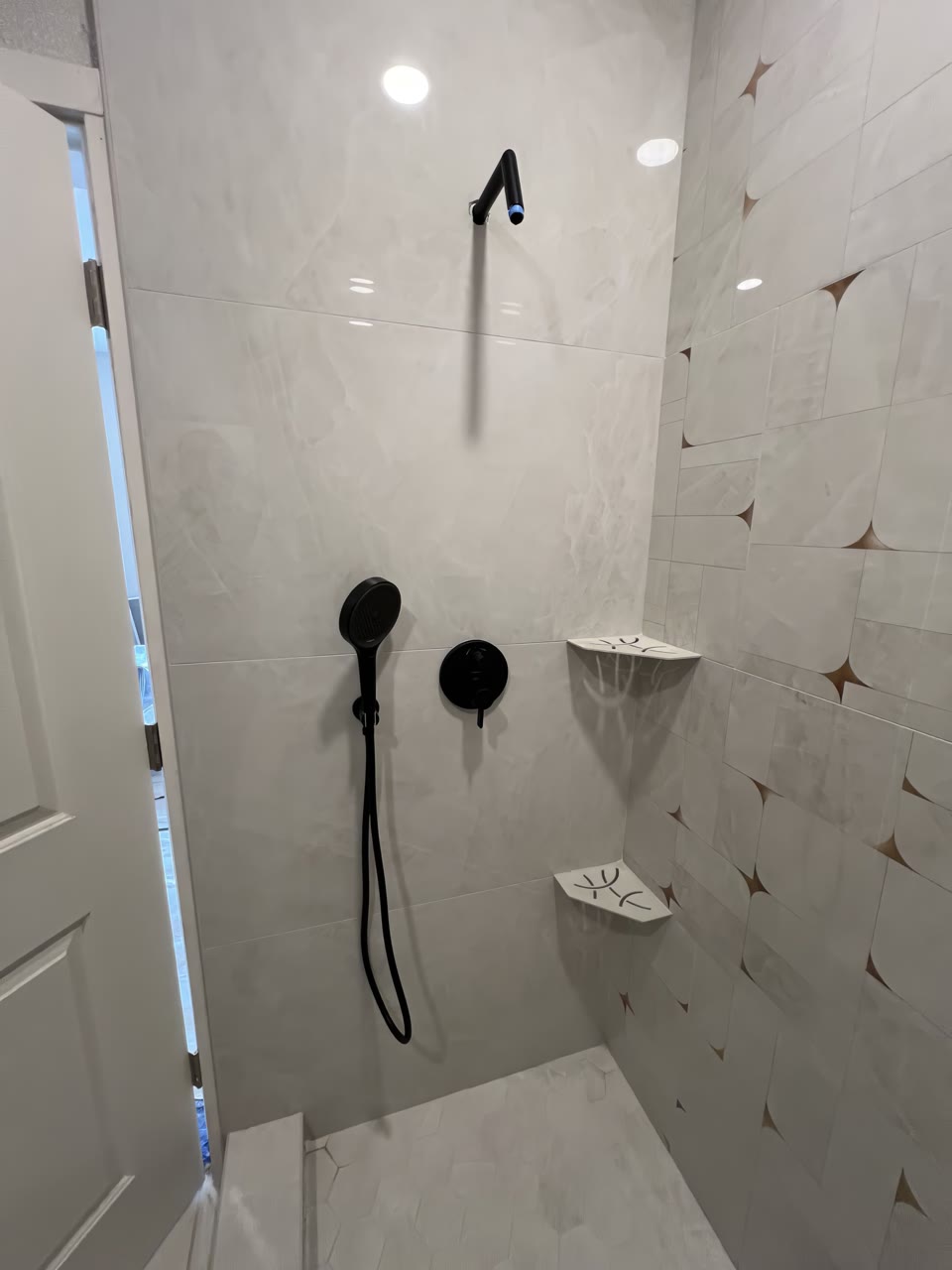
For the shower, a frameless glass panel beats a framed enclosure or a curtain every time in a small room. You can see straight through to the tile behind it, so the bathroom doesn't feel chopped into a separate wet box. If you want some privacy, fluted or lightly textured glass still lets light pass through.
Lighting and storage that don't eat the room
Small bathrooms in older homes are usually under-lit. Layer it instead: a ceiling fixture for general light, sconces or a backlit mirror at face height, and a damp-rated light in the shower. For storage, build it into the walls so it doesn't crowd the floor: a recessed niche in the shower, a recessed medicine cabinet between studs, and a tall, shallow cabinet over the toilet.
Deal with what's behind the walls in older homes
This is where Bay Area homes need extra attention. Many homes here from the 1920s through the 1950s still have original systems that should be addressed while the walls are open:
- Galvanized supply pipes: Galvanized steel pipe is past its lifespan in most older homes. If you're opening the wall anyway, that's the time to repipe to copper or PEX.
- Knob-and-tube and ungrounded wiring: Old or ungrounded wiring is a hazard in a wet room. Code today calls for GFCI protection and grounded circuits.
- Ventilation: A lot of older bathrooms have no exhaust fan, or one that dumps into the attic. You need a properly sized fan vented straight outdoors, or moisture rots framing and feeds mold behind the new tile.
Get the waterproofing right
Tile and grout are not waterproof on their own. The waterproofing happens on the layer underneath: a membrane on the shower walls, sealed seams and corners, a waterproofed niche, and a correctly sloped shower base. This is the most important detail in a small shower, and it's invisible once the tile goes on, which is exactly why the wrong crew skips it.
What it costs and how to start
Budget depends mostly on how much is hiding behind the walls. We walk through the real numbers in our bathroom remodel cost guide and broader remodeling costs overview, and you can see the full scope of what we handle on our bathroom remodeling page.
Common questions
Can a small bathroom really feel bigger without moving walls?
Do I have to replace the plumbing and wiring during a bathroom remodel?
How long does a small bathroom remodel take?
Related reading: aging-in-place remodels.
Sources
Thinking about a project?
Get a real number for this job
We come out, measure, and put a line-item price in writing. Free, and there is no obligation to use us.
- CSLB #1050108 · licensed and insured
- Serving San Jose and the South Bay
Prefer to talk? Call or text (408) 667-4946. Office hours: Monday to Friday, 7 am to 3 pm.